Creative Farm: A Designer’s Honest Review for Real-World Use
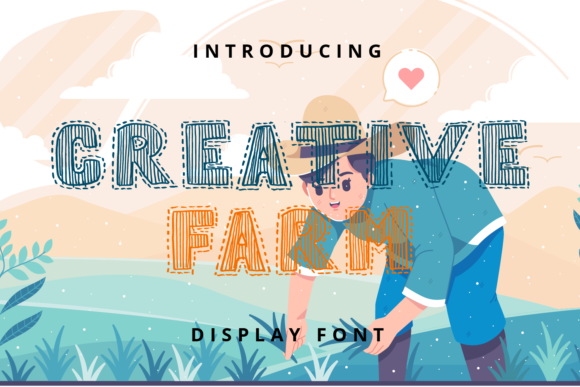
Opening the Creative Farm font file for the first time, I was immediately struck by its playful yet intentional design. It’s not a font that tries to be everything to everyone—it knows what it is and owns it. The letterforms have a hand-crafted charm with subtle irregularities that feel authentic, not forced. It leans into a rustic-modern aesthetic, blending just enough whimsy with clean structure to make it versatile for the right kind of project.
First Impressions Matter
Creative Farm feels like a breath of fresh air in a world oversaturated with minimalist sans serifs. It's a display font with personality, but not the kind that screams for attention—it hums it. The curves are soft but confident, and the baseline has a gentle bounce that gives it a handmade feel without sacrificing legibility. It lands somewhere between a script and a decorative sans, making it ideal for projects that want to feel approachable, creative, and slightly nostalgic.
This is the kind of font you’d see on a boutique coffee shop’s packaging, a lifestyle blogger’s Instagram headers, or a children’s book cover. It brings warmth and friendliness, which is rare in digital design these days.
Performance Across Real Design Scenarios
I tested Creative Farm across a range of design applications, and it held up surprisingly well in several key areas. Here’s how it performed:
- Logo Design & Brand Identity: Works best for brands with a casual, artisanal, or creative edge. It reads well at larger sizes and has enough uniqueness to stand out without being distracting. That said, it’s not ideal for formal or corporate brands.
- Packaging & Product Labels: Shines in this space. I used it on a mockup for a line of organic teas and it gave the brand a handcrafted, trustworthy feel. The rounded edges and open spacing helped maintain clarity even on small labels.
- Posters & Invitations: Perfect for event branding with a cozy or creative theme. Paired with a clean sans serif for body text, Creative Farm adds just the right amount of visual interest without overwhelming the layout.
- Social Media Graphics & Digital Ads: Stands out in thumbnails and mobile feeds. Its character weight and spacing help it pop without needing extra effects like shadows or outlines.
- Printable Products & Canva Templates: Works beautifully in downloadable planners, greeting cards, and Cricut-based craft projects. It has that “maker” vibe that resonates with DIY audiences.
- Web Headers & Blog Graphics: I’d use it sparingly here. It reads well in large headlines, especially with a contrasting body font, but readability drops slightly at smaller screen sizes.
Where to Use It Carefully
Creative Farm excels in short bursts of visual storytelling. It’s not a workhorse font, so here’s where to tread lightly:
- Long-Form Body Text: Avoid using it for paragraphs. The decorative nature of the typeface slows down reading speed and can cause visual fatigue.
- Very Small Sizes: Test it at 10–12pt before using in print or mobile. Some characters (like the lowercase “e” and “a”) start to blur together at smaller sizes.
- High-Contrast Environments: In black-on-white or white-on-black scenarios, the font’s softer edges can get lost. Consider using a slightly bolder weight or adding a subtle outline if needed.
- Formal or Corporate Settings: Unless you’re intentionally breaking the mold, Creative Farm reads too casual for legal, financial, or medical branding.
Impact on Design Fundamentals
One of the biggest strengths of Creative Farm is how it affects the emotional tone of a design. It naturally leans toward warmth, creativity, and authenticity—perfect for brands trying to connect with audiences on a personal level.
- Readability: Good at headline sizes, less so in subheadings or captions.
- Hierarchy: Helps establish visual hierarchy when paired with more neutral fonts.
- Brand Consistency: Can be consistent across materials if used selectively and with spacing rules.
- Audience Trust: Feels genuine, which builds trust with audiences who value craftsmanship and personality.
- Recognition: Unique enough to be memorable, especially in logo applications.
- Professionalism: Adds charm without crossing into unprofessional territory, as long as it’s not overused.
- Visual Mood: Brings a light, friendly tone that’s hard to achieve with more structured fonts.
- Engagement: Works well in social media and marketing visuals where emotional resonance matters.
Before using Creative Farm in client or business work, here are a few practical checks to run:
- Test in Black and White: Sometimes the softness of the font gets lost without color contrast.
- Check Small-Size Readability: Zoom out or print a sample to ensure it still reads clearly.
- Use Real Mockups: Don’t rely solely on screen previews—see how it looks on physical packaging or printed materials.
- Compare Uppercase vs Lowercase: The lowercase has more personality, but uppercase reads bolder and cleaner in logo design.
- Review Spacing: Kerning is generally solid, but a few letter pairs (like “fa” and “wa”) may need manual adjustment.
- Pair with Other Fonts: Try pairing Creative Farm with serif, sans serif, script, and other display fonts to see how it holds its own. It pairs especially well with geometric sans serifs for a modern-rustic contrast.
Final Thoughts for Creative Professionals
Creative Farm is a display font that walks the line between fun and functional. It’s not a one-size-fits-all solution, but when used with intention, it can elevate a design from ordinary to memorable. Whether you’re crafting a brand identity for a small business, designing a social media campaign, or creating printable products, this font brings a sense of warmth and originality that’s hard to replicate with more generic typefaces.
As with any premium font, always confirm the licensing before use—especially for commercial applications or client work. If you’re looking for a font that feels personal, creative, and slightly nostalgic without sacrificing usability, Creative Farm might just earn a permanent spot in your design toolkit.